Excuse us
But this problem will be end on 24' august.Until than i cheer succes to all teams and of course VIVA Romania.
Ferrari Reveals 599X Concept
Lambo Murciélago LP 670-4 SuperVeloce Stomps Into Geneva
Aston Martin DBS Volante
ROLLS-ROYCE 200EX

Compressed air cars are powered, in short, by air. Air is compressed and then it is released which is the source of propulsion. These air cars have been in the developmental stages for many years and are very, very close to reaching wide commercial markets.


Click on image to large itPorsche owes no small debt of gratitude to its unique tradition that has helped turn the company into one of the most innovative and economically powerful car manufacturers in the world. This tradition is the fuel that drives future vehicles.
Our tradition is an honor and an obligation at the same time. This is why a new museum is currently being built at Porscheplatz in Zuffenhausen. In the new museum, our tradition will thrive more vividly than ever, for this is where the company will show itself at its best: strong and alive, with a heritage firmly rooted in the past and a pioneering mind firmly set on the future.
Even the extravagant construction sign shaped like a round sculpture and sitting right in the middle of Porscheplatz makes the onlooker wonder what the building will finally look like.
At the Frankfurt auto show last fall, BMW chief Norbert Reithofer confirmed that his company would build what he called a "gran turismo" based on the CS concept car first unveiled at the Shanghai show the previous April. The CS, a low-slung four-door that is longer, lower, and wider than a 7-series, also indicates the design direction for BMW as it emerges from its widely criticized "flame surfacing" era. Although Reithofer referred to the new entry as a GT, its rivals will be the growing cadre of four-door coupes: the Mercedes-Benz CLS, the Aston Martin Rapide, and the Porsche Panamera. The BMW will be based on the upcoming new7-series and is expected to use the same powertrains. The challenge of making this larger and (presumably) heavier car into a sportier offering is in the hands of Gerhard Richter, who - with more than twenty-five years at BMW's M division - seems well-qualified for the job.
A BIG OL' SWANKY FOUR-DOOR BY ANY OTHER NAME: At least BMW isn't calling it a four-door coupe - it's a four-door GT. Because, you know, there's a difference.

Honda Civic Type S Fireblade can be recognized and logos" Fireblade "present both exterior and interior. Under hood, people at Honda have cars equipped with diesel propulseur i-CTDi of 2.2 litres, which develops a power of 140 HP at 4,000 rpm and a torque of 340 Nm at 2,000 rpm. Coupled to a gearbox with six reports , HondaCivic Type S Fireblade reach 100 km / h in 8.6 seconds and a top speed of 205 km / h, in terms of consumption of 5.2 km litres/100. The price of this special edition is about 25,000 euros.
Well the history of motorcycle is really amazing.From the first motorcycle which looks like this .This domain evolve fast.In just 123 years(1885-2008) motorcycles became more faster than a car and also them become really useful in this traffic.Their aspect changed from year to year, and I'm sure this thing wi
ll continue.In 1902 was been created the first motorcycle which looks like one.But the biggest company of motorcycles,
which exist now too, appeared latter, after 1946.Now the motorcycles are cooler than the the motorcycles from that period and this is obviously because now exists a good industry in this domain.Look at this .You can't tell that you don't want to have this motorcycle.

In the name of fuel economy, a mild hybrid system will come standard on all gas-powered 2009 Smart ForTwos sold in Europe.
Previously an option on the 71-hp ForTwo, the system, which Smart calls the `Micro Hybrid Drive,' is now standard on both 61- and 71-hp gasoline engines.
The MHD consists of a stop/start system, built into the vehicle's starter/generator. Once a driver touches the brakes or slows the car to less than five mph, the ForTwo's engine is shut off, leaving a battery pack to power accessories. Conversely, the system works with the ForTwo's automated-manual transmission to restart the engine and launch the car once the driver steps on the accelerator.
Smart claims the MHD helps the ForTwo return up to twenty percent better fuel economy in city driving, while reducing carbon dioxide emissions to 103 grams per kilometer.
Although the system is currently destined for European streets only, the system's simplicity - coupled with a renewed interest in small cars within North America - could push the system onto U.S.-spec Smarts in the near future.
Want proof that times are changing? Here you go: This is a Hyundai that we actually want - no, strike that, that we can't wait - to drive. The Genesis coupe is based on the Korean company's rear-wheel-drive Genesis sedan, and while it won't get the sedan's 4.6-liter V-8, it still will get a healthy dose of horsepower under the hood. Buyers will have a choice between a 2.0-liter turbocharged four-banger pumping out 212 hp on regular fuel (or 223 hp on premium) and a 3.8-liter V-6 producing 306 hp (preliminary figures).
Although it boasts a curb weight of about 3500 pounds, the two-door Genesis should be able to keep up with the big boys in this segment from a technology standpoint. Four-piston brake calipers, optional nineteen-inch wheels, a track-tuned suspension, a front strut-tower brace, and a Torsen limited-slip differential will help entice performance-oriented customers into Hyundai showrooms. (Yes, that's right: "performance-oriented customers" and "Hyundai" in the same sentence.) Topping it all off is an MSRP that our sources indicate will match or undercut that of the Ford Mustang.
CHEAP, CHEERFUL, AND PUTTING THE BIG BOYS ON NOTICE: A viable Mustang competitor with an enthusiast bent and a low price? Sign us up.

that has a fabric roof, the car is very rigid, due to the use in building a body of carbon fibre and aluminium. Besides low mass, and Lexus promises a dynamic behavior exception. LF-A Roadster is equipped with a V10 propellant of 5.0 litres, develops 500 HP. Bin speeds, along with large heaters were mounted in the rear, in order to obtain a report from the masses almost 50:50. This can speed roadster up to 320 km / h. The rim 20-inch hide a braking system especially developed by the Division "F" for this model, with ventilated discs of 360 mm in front and 345 mm rear. The headlights have a top of the arrow, a symbol of great value in Japanese culture, and include - besides lamps with xenon - and LEDs on the edges. The air is accelerated for cooling the engine and braking discs through the mouths of admission very well thought out, height only 1.22 ma car contributing factor in getting an aerodynamic very good. The eleron large automatically adjusts its position, depending on the speed and style led to obtain a high solidity.


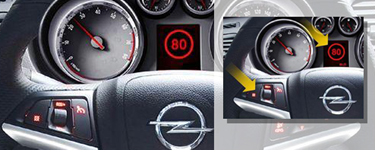
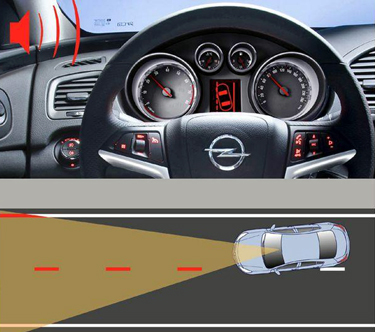
Insignia seems to be a device bringer essential for the security of its passengers. It is a video camera mounted in front of the bar, you can read traffic signs and then atention driver of dangers, from the limitations of speed and to overcome lane away. Opel (Vauxhall, as called german brand in the UK) has just presented the first details about newest and extra eyes" to higher versions team Insignia model. Named Front Room System (FCS), the system has a camera mounted in front of the car with two operating modes:

Ferrari may only produce about 6,000 supercars per year, but the Italian automaker still wants to help control global warming by reducing its CO2 emissions by 40-percet. That's a substantial savings when one considers that Ferrari will need to reach their goal by sustaining and likely improving overall performance. General Manager Armedeo Felica told Reuters that Ferrari intends to reach this goal in 2012 by improving the efficiency of their engines and bringing down the weight of its already trim supercars. While the 40-percent reduction in fossil fuels won't come close to the proposed 120 grams/kilometer that the European Commission is looking to for 2012, it will at least put a dent in Ferrari's atrocious appetite for benzina.
IRVINE, California - Kia Motors America (KMA) today announced it will give its new midsize SUV the moniker of "Borrego" when it debuts in January at the Detroit Auto Show. The Kia Borrego will be manufactured in Korea and go on sale in North America in late spring or early summer of 2008 as a 2009 model. Built with body-on-frame construction incorporating the latest in NVH engineering philosophy, Borrego will be Kia's newest addition to its well-rounded full-line of vehicles that continually provide value, safety and a steadfast 10-year/100,000-mile warranty to consumers. Borrego will be available with either a V6 engine or the company's first V8 offering, which will also boast Kia's largest towing capacity to date.
There's more than a hint of Toyota's PM, i-Swing and i-REAL series about this concept. But where Toyota admits that the driver may occasionally want to get out of the pod, Suzuki sees no reason for such extravagant use of your legs when operating the PIXY. Leaving the city for a blast down the highway? Just drive your PIXY in to your SSC mothership. Want to go for a thrash though the mountains? Park up in your SSF sports-car unit. There's even a speed boat (SSJ) on the cards, not that you'd be able to smell the sea breeze. Both the PIXY and SSC appear to be hermatically sealed and were unbearably hot under the stage lights. Ideal transportation for a post nuclearwar world perhaps?

If you've got to have a full-sized rear-driver from the Blue Oval, the Mercury Grand Marquis will still be available. The Marquis is apparently much more popular with the public than the Vic, with nearly 38,280 Marquis' sold by dealers in the first nine months of this year. Compare that to the Crown Victoria, which moved 3,000 Vics to retail buyers in all of 2006. I guess this means we'll have to start looking out for Charger headlights in our rearview mirrors at night...
Ford has always been one of the top automakers for consumers who are looking for a reliable car, van, or SUV. Most families choose Ford because they are reliable and affordable cars. Everyone will be happy to know that on that list of things to love about Ford safety is number one.
Ford Motor Co. along with Honda Motor Co. had the most vehicles on the Insurance Institute for Highway Safety’s annual list of the safest cars for the 2008 model year. Thirty-four vehicles received the top safety pick designation for 2008, compared with 13 vehicles from the 2007 model year. The institute requires new cars and trucks to have electronic stability control, or ESC, to qualify for the award. Many auto companies are putting the anti-rollover technology into their fleets ahead of a government requirement for the systems by the 2012 model year.
Ford was represented on the list by the Ford Taurus and Mercury Sable passenger cars with optional ESC, and the Ford Edge, Ford Taurus X and Lincoln MKX midsize sport utility vehicles. The Volvo S80, C70 midsize convertible and XC90 SUV, part of Ford’s Volvo unit, made the list.
Ford has said previously that it will put stability control on its entire lineup by the end of 2009. Electronic stability control senses when a driver may lose control of the vehicle and automatically applies brakes to individual wheels to help keep it stable and avoid a rollover. The technology helps motorists avoid skidding across icy or slick roads or keep control of their car when swerving to avoid an unexpected object in the road.
If more automakers improved their safety features more than 10,000 deadly accidents could be avoided annually. Hopefully this will encourage more automakers to focus more on safety and less on looks.
Yamaha has a reputation for enjoying the white heat of competition. We love racing because it allows us to rapidly develop new technology and showcase that technology to you. This R6 is packed with tech mirrored from our world championship race program, to take your riding excitement to the extreme. You get track-developed electronics: YCC-T chip-controlled throttle for ultimate acceleration and YCC-I electronically controlled variable intake funnels for bigger power and torque.
The R6 enhances man-machine connection, giving you the confidence to exploit your skills.
There's nothing wrong with the current Jaguar XJ that a modern interior and exterior wouldn't fix. Thankfully, in 2011, that's just what it will get - the next XJ will pair the current model's high-tech aluminum unibody with contemporary styling. From a design standpoint, the 2011 XJ will adopt the same theme as the just-introduced XF sedan, so expect an ultra-aggressive tumblehome and slim headlights similar to those found on Jaguar's 2007 C-XF show car. Jaguar's design staff has the Maserati Quattroporte and the Bentley Continental Flying Spur in its crosshairs, so they can't afford to be conservative.
The XJ's interior will be a mix of familiar elements. Jaguar's love-it-or-hate-it touch-screen interface returns, and the XF's rotary transmission selector migrates here as well. Proximity sensors are predicted for many controls, and a full-length glass sunroof will be offered.
Power will come from a new 5.0-liter V-8 engine that will make about 400 hp; a supercharged XJR version should produce roughly 100 hp more. Both engines will be mated to a seven- or an eight-speed automatic transmission. A concept version of the next XJ should debut at the Paris show in October.
YOU CAN STOP SPINNING IN YOUR GRAVE, SIR LYONS:Finally, an XJ that looks as up-to-date as it drives. It can't come too soon.


For the first time ever, Audi developed a car specifically for a major Hollywood motion picture. Audi engineers created a car for 'I, ROBOT's' incredible world of 2035.
The resulting Audi RSQ sport coupe is a visionary interpretation of Audi's typical design language. The most important thing was that despite its extreme character the car should still be recognized as an Audi. The cinemagoer will therefore see the new Audi front-end with the typical single-frame grille in the movie.
Designers, engineers, technicians and model engineers had just ten weeks to build the concept
car. At the beginning of July the Audi RSQ arrived on the set in Vancouver where it was to stay for several months of shooting. Audi also supplied an outer-skin model of the car to be used in a crash scene, as well as a separate interior mock-up to shoot interior scenes.
It is 2035 in Chicago, and cars no longer travel on wheels but on spheres. ''Integrating these spheres into the car's design was one of the greatest challenges we had to solve'', says Julian Hanig, responsible for the RSQ's exterior design. The result was a two-seat, mid-engined sports car with sphere-shaped wheels running in similarly shaped wheel arches. Hanig said. ''This even enhanced the car's sculptured character.''
The striking shape of the angular body cutouts for the head-light modules influence the front-end appearance of the RSQ. They are combined with side air inlets. The xenon light tubes behind the clear-glass covers enhance the character of the front-end design.
Where you find the rear window on most sports coupes, an aluminium hood covers the engine in the RSQ. In plain view this cover is an oval, running right up to the windscreen and integrated into the body by a transverse bar.
The interior of the RSQ was reduced to the essential elements of driving. Will Smith sits in the car as if in a jet aircraft's cockpit. The center console surrounds the pilot's body in the bucket seat.
The steering wheel is another element in this aircraft cockpit analogy. Like an elevator control, it is open at the top and folds out of the instrument panel after the driver has entered the car.
The cockpit atmosphere of the interior is emphasized by the wide panoramic windscreen that extends back into the roof. The glass surface runs from the right and left roof pillars as far as the rear of the cabin. This ensures a much greater field of view for the driver and passenger.
All relevant information for driving the car is fed into the digital display in the instrument cluster by means of Audi's Multi Media Interface (MMI) control system. The air conditioning and radio of the RSQ are classified as secondary functions. Entertainment functions have been omitted in favor of the sporting concept.
Sometimes, cash cows simply can't be milked any longer. Ford has produced (or, in the case of various Shelby vehicles, helped produce) a dozen different variations of its iconic Mustang since 2005 - some of which cranked out upward of 600 hp. And while special-edition Mustangs are a powerful novelty, the blue-oval brass decided that a newer, refreshed 'Stang should battle the upcoming Dodge Challenger and Chevrolet Camaro.
Enter the 2010 Mustang that will hit showrooms in spring 2009. America's original pony car won't get a complete revamp, but it will at least get a reshaped front and rear, a freshened grille, new headlights, and updated vertical taillights. Although the 2010 Mustang's styling is still hidden under heavy camouflage in spy photos, a close look shows exterior features inspired by the sleek, Italdesign-penned Mustang by Giugiaro concept (below) that debuted at the 2006 Los Angeles auto show. A full-glass roof like the one from that car may be offered.
Powerplant options - largely influenced by the recent rise in CAFE standards - likely will include a twin-turbo EcoBoost V-6 and a 5.0-liter V-8.
THE OLD GRAY MARE, SHE AIN'T WHAT SHE USED TO BE: The current-generation Mustang is getting old, and while we like the idea of a turbo V-6, we'd still rather that Ford spent the money to reduce NVH and polish the rest of its aging horse.

There is no one lark - the gigantic coupe wished of so many heads of stars crowned and music throughout the world can be bought against a minimum 5 million! Built as a demo car to promote the performance of the tyres Fulda (and to render homage to an aerodynamic vehicle made by the manufacturer in the german'30), Exelero is based on a technical platform limousine Maybach 57 S, is propelled by a V12 biturbo of 700 HP is able to reach a speed Maximum 351 km / h. Up there, but hundred is swept off in only 4.4 seconds, absolutely impressive to us if we think that the real dimensions of this candidate for the title Batmobil far exceed even those of a luxury limos usual: length 5.89 m, 2.14 m in width, weighing approximately 2.7 tons. And do not you think that the figures relating to the anticipated performance are: the car has proved all during a session of tests on the famous circuit Nardo. From our point of view, however, could have Exelero and 100 CP: how to appeal generate, who will be able to put hands on it will do everything possible to keep pace with pedestrians ...

Photos taken in the studio with a new creative people from Ferrari, GT California, or teasers spyshot-we all saw, but the pictures have gone before. In the end, though, will have the opportunity to present more pictures made in nature, many of them with the italian supercar. Ferrari GT California will be available only in the cabrio version will be the first for The Cabrat Horse a roof with automatic action, double-clutch technologyand engine positioned front. So coachwork, as well as underframe, are made of aluminium, the entire package being put in motion the new 4.3 litre V8 with direct injection. It generates 460 HP at 7,500 rpm and allows new model to sprint up to 100 km / h to start on the spot in less than 4 seconds. Force driver is sent to the rear deck through new boxes speeds with seven steps and double clutch, controlled by the same control system the present and hauling 599 GTB Fiorano. At such a monster, brakes should not be neglected at all, so that engineers in Ferrari offers standard equipment Brembo brakes with ceramic discs and carbon fiber. Ferrari GT California will be officially presented at the Auto Salon in Paris in October. To give full gallery click here.
With gasoline surging toward $4 per gallon and massive SUVs falling massively out of favor, it would seem that GM's Hummer division would be entering the autumn of its years. But according to J. D. Power and Associates, the brand captures and retains owners better than most, so it's worth nurturing. The trick is making hugeness less of a calling card - a process that started with the demise of the H1 - but preserving extreme off-road ability. As anyone who has done any serious off-roading can attest, size is your enemy on the trail, so a smaller but still off-road-ready Hummer, perhaps like the HX concept (below), makes perfect sense. The HX gives us a good look at the upcoming H4, and if that new entry has all the off-road gear of the show car, it'll be a strong addition to the lineup. The HX sports full-time four-wheel drive (naturally) with locking front and rear differentials, 35-inch tires, a 3.6-liter direct-injected V-6, and an electronically disconnectable front antiroll bar - not to mention that unmistakable blocky styling.
HONEY, I SHRUNK THE HUMMER: And not a moment too soon, given the state of the economy. At last, proof that Hummer doesn't operate in a vacuum. Sort of.
Never mind all the spy photography - here's the first official look at the 2010 Lotus Eagle, the latest sports car emanating from the house that Chapman built.
Scheduled for an official unveiling at the British motor show on August 22, the Eagle, a 2+2 coupe, is the first all-new Lotus car since the 1995 Elise (the Elise-based Europa S, apparently, doesn't count).
Designed for enthusiasts who need a little more practicality, the Eagle includes a backseat, although, with provisions to anchor car seats, Lotus admits it's a kids-only zone. While the rear trunk was designed to fit a set of golf clubs, customers looking for extra storage space may opt for a two-seat model with a cargo shelf in lieu of the rear seats.
Though Lotus provided only one photograph, it can be seen that the Eagle's shape seems much more organic and proportionate than that of the Europa S. We note, however, that the styling is very derivative of the M250 concept, originally shown to the public nearly eight years ago in Geneva.
Like the Elise, the Eagle sources its engine from Toyota, but this time in the form of a 3.5-liter V-6. Essentially the same motor found in the pedestrian Camry sedan, Lotus tweaked the engine ever so slightly to yield 280 hp. No performance figures have been released yet, but Lotus claims the car is quicker and more stable around the Nurburgring than the Elise.
Production, expected to total 2000 cars per year, will begin in early 2009. Unlike the Europa S, expect the Eagle, in either 2+2 or two-passenger form, to eventually cross the pond into North America.